
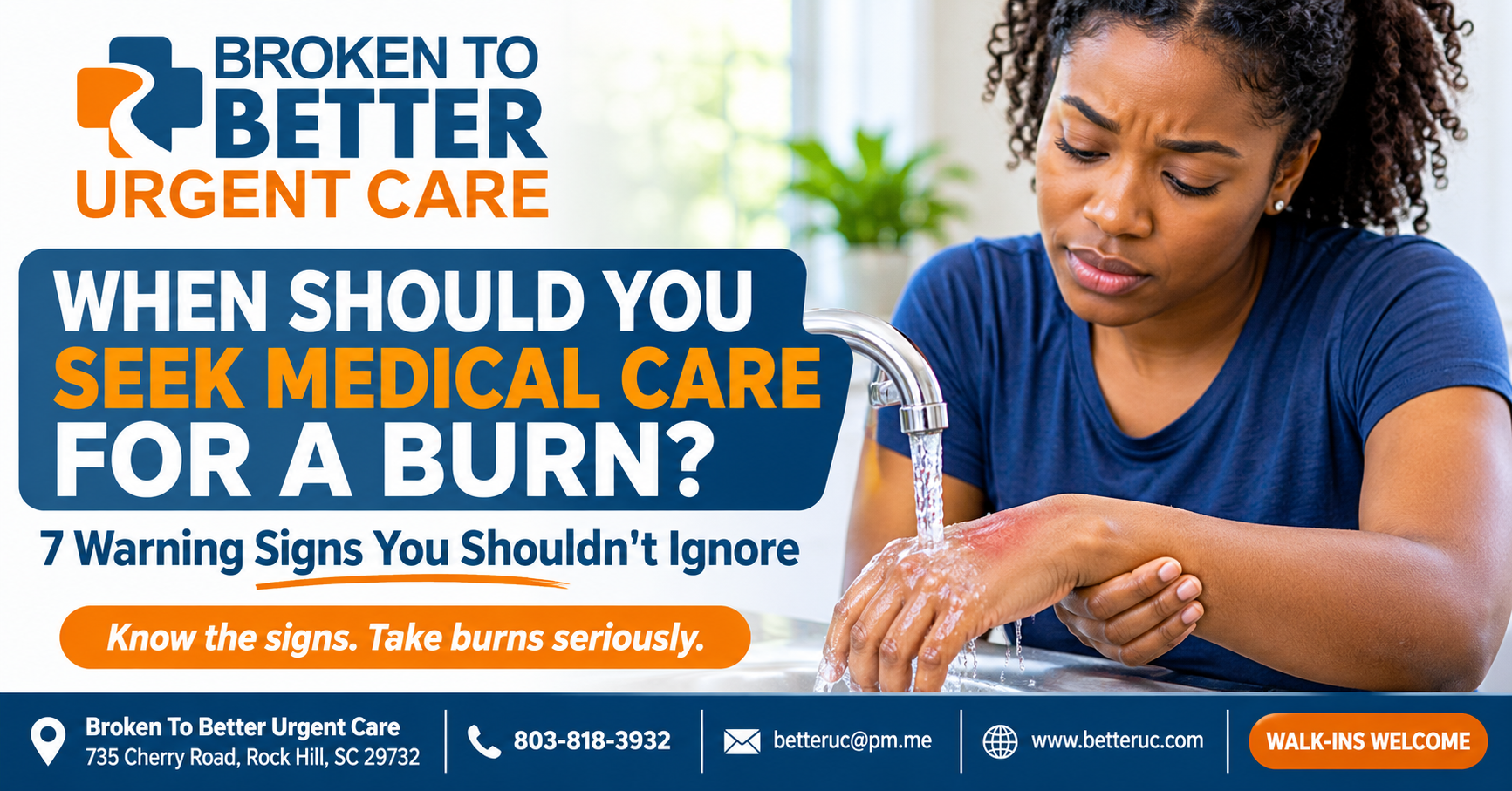
When to Seek Medical Care for a Burn: 7 Warning Signs You Shouldn’t Ignore
When to Seek Medical Care for a Burn: 7 Warning Signs You Shouldn’t Ignore https://betteruc.com/wp-content/uploads/Burn-Care-Warning-Signs-Guide-1024x536.png 1024 536 Nafin https://secure.gravatar.com/avatar/4cfca08c93f25cb7de2bdc153751b466c86a6a954839638fce7a19e5717956de?s=96&d=mm&r=gBurns are common injuries that can happen during everyday activities. Touching a hot pan, spilling boiling water, getting too close to a fire, or accidentally contacting a hot surface can damage the skin. Although some minor burns can be managed with basic first aid, others require professional medical evaluation.
Knowing when to seek medical care for a burn can help you recognize warning signs, respond appropriately, and avoid complications.
Burns vary in severity depending on their depth, size, location, and cause. A small-looking injury may still need medical attention, especially when it affects sensitive areas or involves significant pain, blistering, or skin damage.
In this guide, Broken To Better Urgent Care explains seven warning signs to watch for, basic burn first aid, and when an injury requires emergency care.
Understanding the Different Types of Burns
Burns are commonly classified according to how deeply they damage the skin.
First-Degree Burns
First-degree burns affect the outermost layer of skin. Common symptoms include:
- Redness
- Mild swelling
- Tenderness or pain
- Dry skin without blisters
A mild sunburn is a familiar example. These burns often improve with appropriate home care.
Second-Degree Burns
Second-degree burns affect the outer layer and part of the underlying skin. Symptoms may include:
- Blistering
- Significant redness
- Swelling
- Moist or shiny-looking skin
- More intense pain
Some second-degree burns need professional evaluation, particularly when they are large or affect sensitive areas.
Third-Degree Burns
Third-degree burns damage the full thickness of the skin and may extend into deeper tissues.
Possible signs include:
- White, brown, black, or charred skin
- Dry or leathery skin
- Extensive tissue damage
- Reduced sensation in the burned area
A serious burn may not always be extremely painful because deeper tissue and nerves can be damaged.
Important: If you suspect a deep or severe burn, seek emergency medical attention. Do not try to determine its severity based on appearance alone.
7 Warning Signs You Should Seek Medical Care for a Burn
Not every burn requires emergency treatment, but certain symptoms should never be ignored.
1. The Burn Is Larger Than Your Palm
The size of a burn can help indicate how serious an injury may be.
A burn larger than the injured person’s palm deserves prompt medical evaluation, especially if it involves blistering or deeper skin damage.
Large burns can cause significant fluid loss and may require specialized treatment.
Do not delay medical attention for a burn that covers a large area of the body.
2. The Burn Has Deep Skin Damage
Deep burns can affect multiple layers of skin and surrounding tissue.
Watch for:
- White or waxy-looking skin
- Brown or black discoloration
- Charred areas
- Dry, leathery skin
- Visible damage extending beyond the surface
These signs may indicate a serious burn that requires emergency evaluation.
Do not apply creams or home remedies to a suspected deep burn.
3. Blisters Develop or the Pain Is Severe
Blisters can develop with partial-thickness burns. They may contain clear fluid and indicate that more than the outermost layer of skin has been affected.
Seek medical advice if a burn develops large or extensive blisters, severe pain, or increasing discomfort.
Avoid popping or draining blisters yourself. The skin covering a blister helps protect the injured area.
4. The Burn Affects the Face, Hands, Feet, or Genitals
Burns involving certain body areas require particular attention because they can affect important functions and may lead to complications.
Seek prompt medical evaluation for burns involving:
- The face
- The hands or fingers
- The feet or toes
- The genitals
- Major joints
Facial burns can also be associated with airway injuries, especially when smoke or hot gases have been inhaled.
Even if the affected area appears relatively small, its location may make the injury more serious.
5. You Notice Signs of Infection
A burn can become infected if bacteria enter damaged skin.
Possible warning signs include:
- Increasing redness around the injury
- Worsening swelling
- Increasing pain or tenderness
- Pus or unusual drainage
- Fever or chills
- Red streaks spreading away from the burn
Seek prompt medical evaluation if these symptoms develop. An infection can become more serious if treatment is delayed.
6. The Burn Was Caused by Electricity or Chemicals
Electrical and chemical burns can cause damage that is not immediately visible.
An electrical injury may affect deeper tissues, muscles, nerves, or the heart, even when the skin shows only a small mark.
Chemical burns can continue damaging tissue while the substance remains in contact with the skin.
These injuries require immediate medical evaluation.
For chemical exposure, move away from the source if it is safe, remove contaminated clothing, and rinse the affected skin with plenty of running water. Follow product-specific emergency instructions and contact emergency services or Poison Control for guidance. Do not attempt to neutralize the chemical with another substance.
7. You Experience Breathing Problems or Signs of Smoke Inhalation
Burns involving smoke, hot air, or fumes can damage the respiratory system.
Watch for:
- Difficulty breathing
- Persistent coughing
- Hoarseness or voice changes
- Soot around the nose or mouth
- Singed nose hairs
- Facial burns after exposure to fire or smoke
These symptoms can indicate an inhalation injury.
Call 911 immediately if someone has difficulty breathing, suspected smoke inhalation, or other signs of a serious emergency. Do not wait for symptoms to worsen.
What Should You Do Immediately After Getting a Burn?
Knowing basic burn first aid can help limit further damage while you arrange appropriate care.
Step 1: Stop the Burning Process
Move away from the heat source or remove the source of exposure if it is safe to do so.
If clothing is burning, stop, drop, cover the face, and roll to extinguish the flames.
Step 2: Cool the Burn With Running Water
For a thermal burn, place the affected area under cool running water as soon as possible.
Many first-aid organizations recommend cooling the burn for approximately 20 minutes. Avoid using ice or ice-cold water directly on the injury.
Keep the rest of the body warm, particularly when treating children or larger burns.
Step 3: Remove Tight Items
Gently remove rings, watches, bracelets, or tight clothing near the burned area before swelling develops.
Do not remove clothing or other material stuck to the burned skin.
Step 4: Cover the Burn
After cooling, loosely cover the area with a clean, nonstick dressing or clean cloth while arranging medical evaluation if needed.
Avoid putting pressure on the injured skin.
Step 5: Seek Appropriate Medical Attention
Do not delay medical evaluation if the burn is deep, large, located in a sensitive area, or caused by electricity or chemicals.
For severe burns or possible inhalation injuries, call 911.
What Should You Avoid Putting on a Burn?
Some common home remedies can make a burn worse or interfere with proper care.
Avoid:
- Applying ice directly to the burned skin.
- Using butter, cooking oil, or toothpaste.
- Applying household creams or unapproved home remedies.
- Popping or breaking blisters.
- Pulling away clothing stuck to the wound.
- Covering a severe burn with a tight bandage.
Instead, cool the injury with running water, protect the area, and seek professional guidance when necessary.
When Should You Visit Urgent Care for a Burn?
Urgent care may be appropriate for certain minor burns that need professional assessment but do not involve life-threatening symptoms or severe tissue damage.
Consider contacting a healthcare provider for guidance if you have:
- A minor burn with persistent pain.
- A burn with concerning redness or swelling.
- A blistered burn that needs evaluation.
- A burn that is not improving as expected.
- Questions about wound care or possible infection.
However, urgent care is not the appropriate setting for every burn.
Large or deep burns, burns involving the face, hands, feet, or genitals, electrical or chemical burns, and suspected inhalation injuries may require emergency department evaluation or specialized burn-center care.
If you are unsure where to go, seek immediate medical guidance rather than delaying treatment.
How Can You Help Prevent Burns at Home?
Many common burns happen during routine household activities. A few safety habits can help reduce the risk of injury.
- Turn pot handles inward while cooking.
- Keep hot liquids away from children.
- Use oven mitts when handling hot cookware.
- Check bathwater temperature before getting in.
- Keep matches and lighters out of children’s reach.
- Avoid leaving candles unattended.
- Follow safety instructions when using electrical appliances.
- Store household chemicals safely and in their original containers.
Taking these precautions can help make your home safer for everyone.
Frequently Asked Questions About Burns
How do I know if a burn is serious?
A burn may be serious if it is large, deep, blistered extensively, affects the face or hands, or involves white, brown, or charred skin. Electrical burns, chemical burns, and burns associated with breathing problems also require immediate medical attention.
Should I put ice on a burn?
No. Do not apply ice directly to a burn because it can cause additional tissue damage. Use cool running water to cool a thermal burn.
Should I pop a burn blister?
No. Avoid popping or draining burn blisters yourself. The blister provides a protective covering over the injured skin and breaking it can increase the risk of infection.
How long does a minor burn take to heal?
Healing time depends on the burn’s depth, size, and location. Superficial burns often improve within several days, while burns involving deeper layers of skin may take longer. Seek medical advice if the injury worsens or does not appear to be healing.
Can a burn become infected?
Yes. Damaged skin can allow bacteria to enter the body. Increasing redness, swelling, pain, pus, fever, or red streaks may indicate infection and should be medically evaluated.
When should I go to the emergency room for a burn?
Seek emergency care for large or deep burns, burns involving sensitive areas, electrical or chemical burns, and injuries accompanied by breathing difficulties or suspected smoke inhalation. Call 911 for life-threatening symptoms.
Take Burn Injuries Seriously
Knowing when to seek medical care for a burn can help you respond appropriately and avoid preventable complications. While some minor burns can be managed with basic first aid, others require prompt professional evaluation.
Remember to cool thermal burns with running water, avoid harmful home remedies, and watch for warning signs such as deep skin damage, extensive blistering, infection, or breathing difficulties.
If you have a non-emergency burn concern, contact Broken To Better Urgent Care to ask whether an evaluation at our Rock Hill location is appropriate.
Broken To Better Urgent Care
735 Cherry Road
Rock Hill, SC 29732
Phone: 803-818-3932
Email: betteruc@pm.me
Website: https://www.betteruc.com
